
Blog
Where Defibrillators Are Commonly Installed

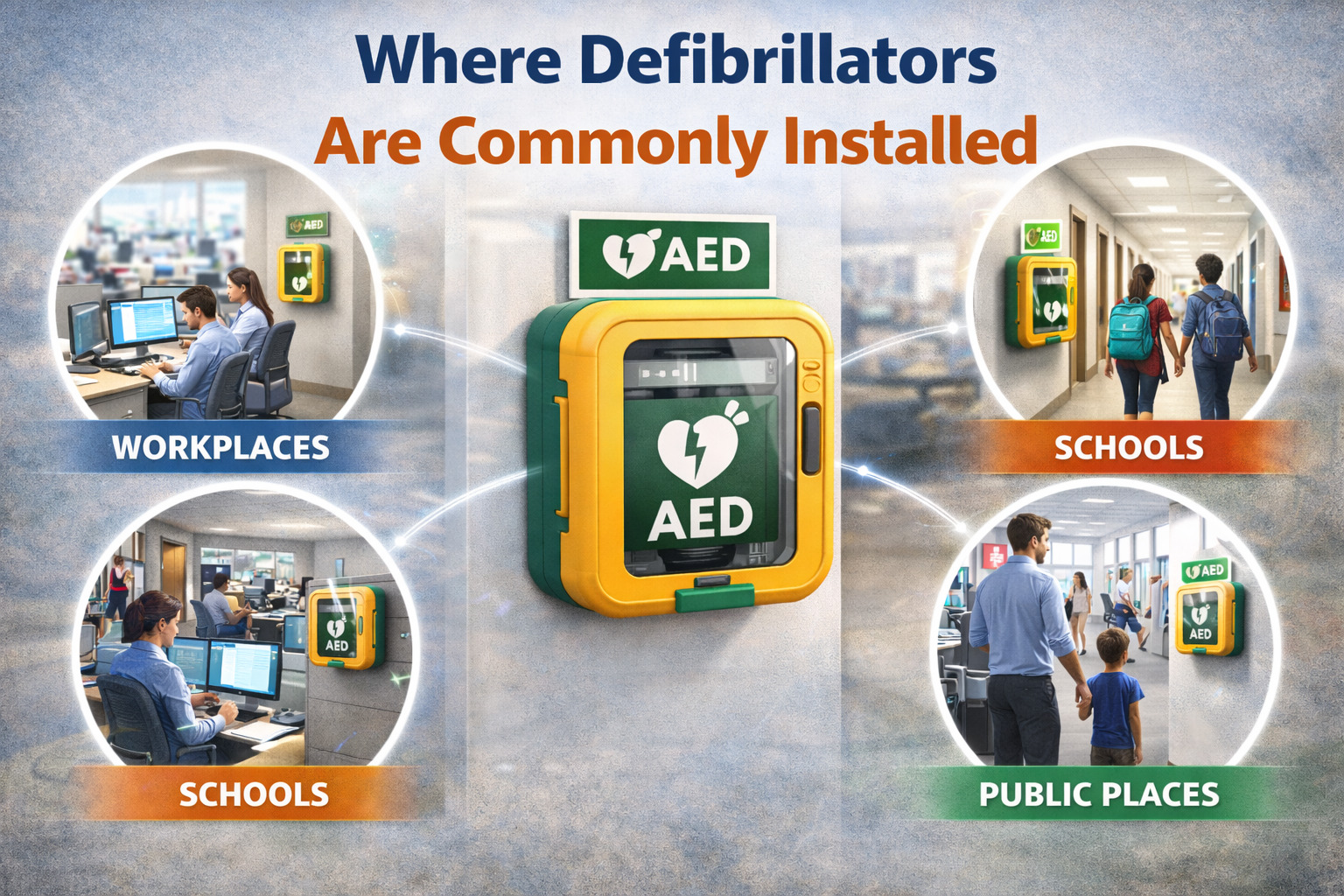
Introduction: Quick Access Saves Lives
Sudden cardiac arrest (SCA) can happen anywhere and without warning. When it does, every minute matters. Defibrillators—commonly known as Automated External Defibrillators (AEDs)—are designed to deliver life-saving treatment before emergency services arrive.
To maximize survival rates, AEDs are strategically installed in locations where people gather, work, exercise, or travel. Understanding where defibrillators are commonly installed helps businesses, organizations, and communities improve emergency preparedness.
Why AED Placement Is So Important
AEDs are most effective when used within the first few minutes of cardiac arrest. Studies show that early defibrillation can increase survival rates by up to 70%.
Key Reasons for Strategic AED Placement
- Cardiac arrest often occurs outside hospitals
- Emergency response times can vary
- AEDs are safe and easy for bystanders to use
- Immediate access saves critical time
Placing AEDs in high-traffic and high-risk locations ensures faster response in emergencies.
Public Places Where Defibrillators Are Commonly Installed
Airports and Transport Hubs
Airports, train stations, and bus terminals see thousands of people daily. Due to large crowds and long walking distances, AEDs are commonly installed throughout terminals and platforms.
Shopping Centres and Retail Spaces
Malls and retail complexes are popular AED locations because of high foot traffic and varied age groups. Clear signage ensures quick access during emergencies.
Sports Facilities and Gyms
Physical activity increases the risk of cardiac events. AEDs are standard in:
- Gyms and fitness centres
- Stadiums and arenas
- Sports halls and recreation centres
Many sports organizations now require AEDs as part of safety compliance.
Workplace and Business Installations
Offices and Corporate Buildings
AEDs are increasingly installed in office buildings, especially those with:
- Large employee numbers
- Multiple floors
- Public-facing services
They form a key part of workplace health and safety planning.
Warehouses and Industrial Sites
Physically demanding work environments benefit from having AEDs on-site, particularly where medical help may take longer to arrive.
Education and Community Locations
Schools and Universities
Educational institutions commonly install AEDs to protect students, staff, and visitors. Placement is often near:
- Reception areas
- Sports facilities
- Main corridors
Community Centres and Places of Worship
Community hubs frequently host events and gatherings, making AED access essential for public safety.
Healthcare and Residential Settings
Healthcare Facilities
While hospitals already have advanced equipment, AEDs are often placed in:
- Clinics
- GP practices
- Care homes
- Dental surgeries
Residential Complexes
Many apartment buildings, retirement communities, and housing developments install AEDs in shared spaces for resident safety.
Vehicles and Mobile Installations
Emergency and Service Vehicles
AEDs are commonly installed in:
- Ambulances
- Police vehicles
- Fire engines
- Security patrol vehicles
Some organizations also include AEDs in company vehicles for remote or on-site work.
Legal and Safety Considerations for AED Installation
While AED laws vary by region, many countries strongly encourage or mandate AED installation in specific settings.
Common Considerations
- Risk assessments
- Accessibility and visibility
- Clear signage
- Staff awareness and basic training
Even where not legally required, AED installation demonstrates strong commitment to public and employee safety.
FAQ: Defibrillator Placement
Are defibrillators only for medical professionals?
No. AEDs are designed for public use and provide clear voice instructions.
How far should an AED be from potential users?
Ideally, an AED should be reachable within 3 minutes of walking time.
Do AEDs require training?
Training is recommended but not required. AEDs guide users step-by-step.
Should small businesses install AEDs?
Yes. Any workplace with staff or public access can benefit from having an AED on-site.
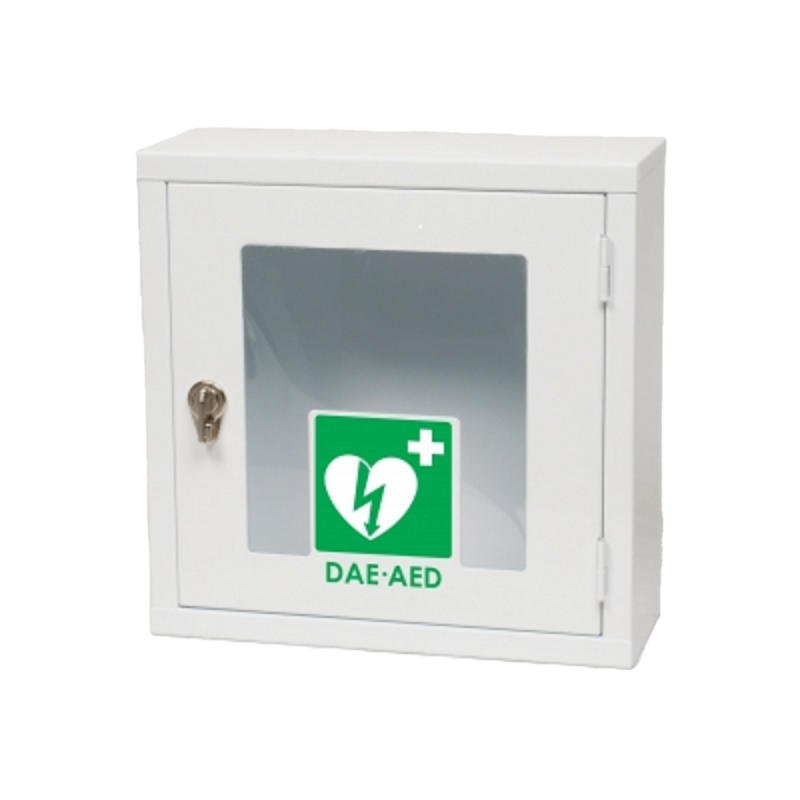
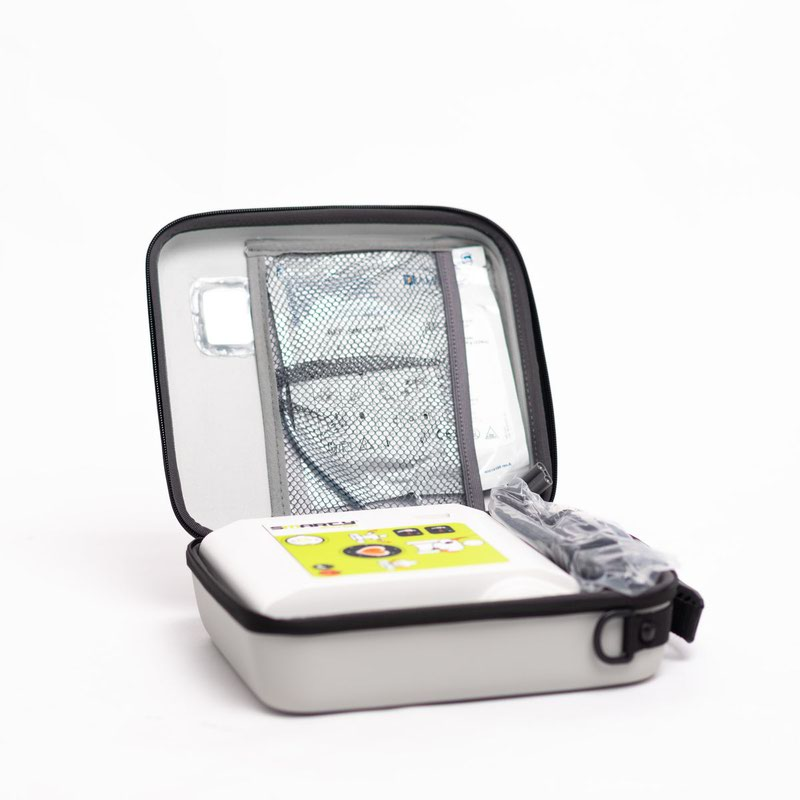
Smarty Saver Fully Automatic Defibrillator
Conclusion: AED Access Makes a Critical Difference
Knowing where defibrillators are commonly installed highlights how important accessibility is in saving lives. From public spaces and workplaces to schools and residential areas, AEDs play a vital role in emergency response.
By ensuring defibrillators are installed in the right locations, communities and businesses can significantly improve survival outcomes and create safer environments for everyone.
👉 Explore our range of defibrillators and AED accessories to enhance emergency preparedness today.