
Blog
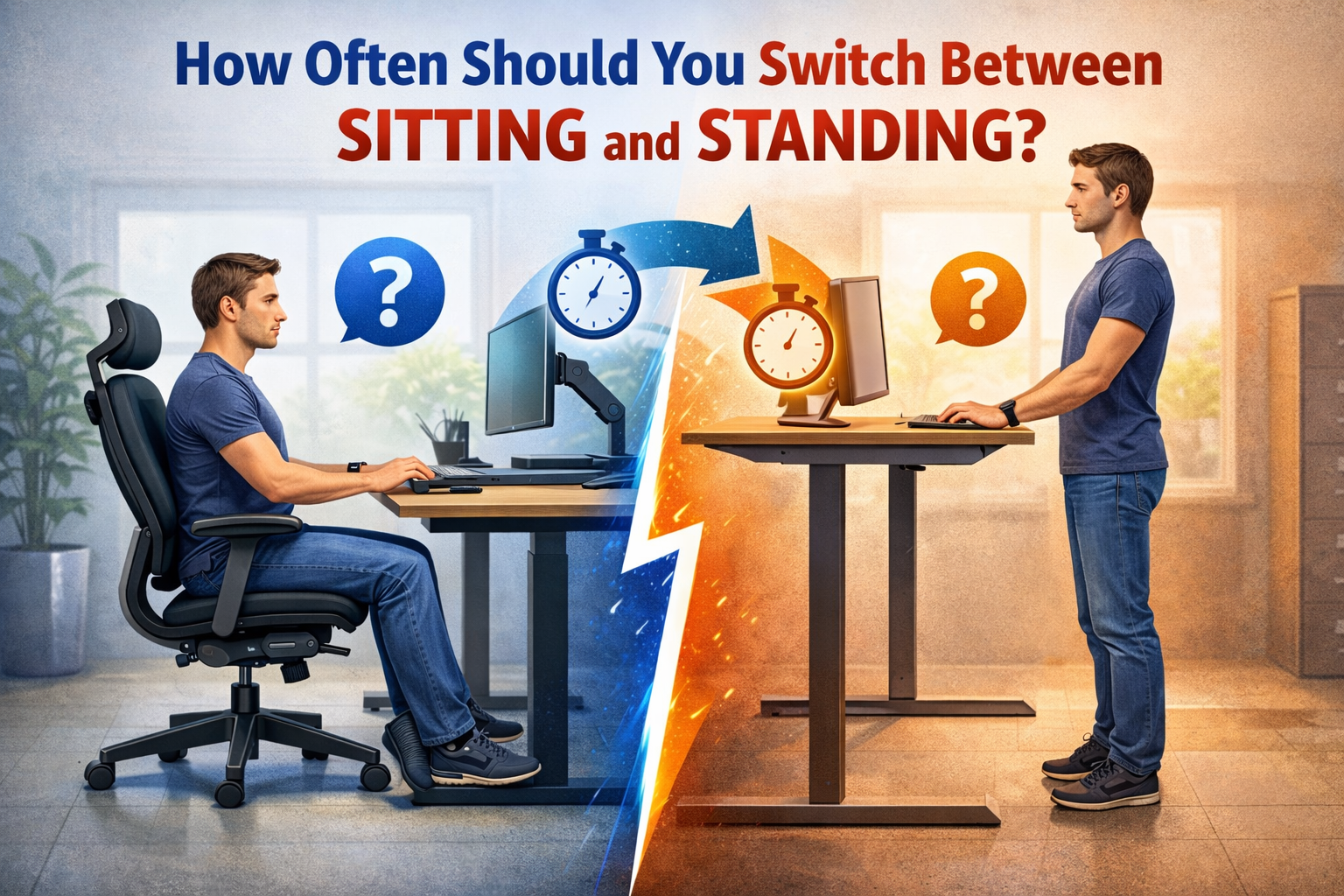
How Often Should You Switch Between Sitting and Standing?

Introduction: The Problem With Sitting All Day
Modern work life often means spending hours at a desk, whether in an office or a home workspace. While sitting may feel comfortable at first, prolonged sitting has been linked to back pain, poor posture, reduced circulation, and lower productivity. As a result, standing desks and sit-stand workstations have become increasingly popular.
But an important question remains: How often should you switch between sitting and standing to stay healthy and productive? The answer lies in balance—because standing all day isn’t the solution either.
Why Sitting or Standing Too Long Is Harmful
The Risks of Prolonged Sitting
Sitting for long periods can negatively impact your body in several ways:
- Increased lower back and neck pain
- Poor posture and spinal compression
- Reduced blood circulation
- Higher risk of fatigue and stiffness
Even with an ergonomic chair, sitting continuously without movement can lead to discomfort and long-term health issues.
The Risks of Standing Too Long
Standing desks offer many benefits, but standing all day can also cause problems:
- Leg and foot fatigue
- Joint strain
- Varicose veins
- Lower back discomfort
This is why alternating between sitting and standing is widely recommended by ergonomics experts.
How Often Should You Switch Between Sitting and Standing?
Most ergonomics professionals recommend the 30–60 rule:
The Ideal Sit-Stand Ratio
- Sit for 30–45 minutes
- Stand for 15–30 minutes
- Repeat throughout the workday
This approach keeps your body moving without causing strain from either position.
Another Popular Guideline: The 2:1 or 3:1 Rule
Some research suggests:
- 2–3 hours sitting
- 1 hour standing
spread across an 8-hour workday.
The key takeaway is frequent movement, not rigid timing.
Signs You Need to Change Positions
Your body often tells you when it’s time to switch.
Time to Stand If You Feel:
- Lower back stiffness
- Slouching or poor posture
- Reduced focus or energy
Time to Sit If You Feel:
- Leg or foot fatigue
- Knee or joint discomfort
- Pressure in the lower back
Listening to your body is just as important as following time-based rules.
How Sit-Stand Desks Improve Health and Productivity
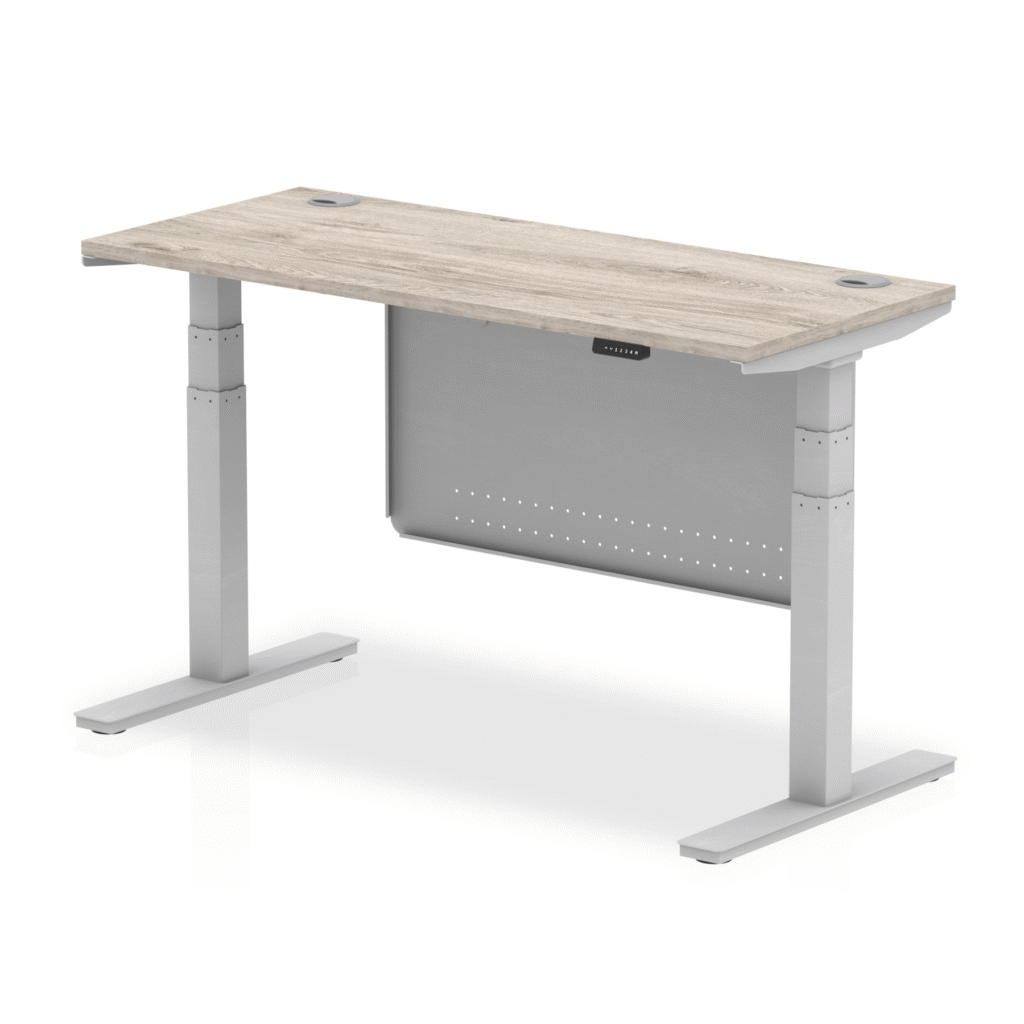
Sit-stand desks allow you to transition smoothly between sitting and standing, making it easier to maintain healthy movement throughout the day.
Benefits of Sit-Stand Workstations
- Reduced back and neck pain
- Improved posture and circulation
- Increased energy and focus
- Lower risk of sedentary-related health issues
For people who work long hours at a desk, sit-stand desks provide flexibility without compromising comfort.
Tips for Switching Between Sitting and Standing Safely
To get the most out of alternating positions, follow these best practices:
Maintain Proper Desk Height
- Monitor at eye level
- Elbows at a 90-degree angle
- Wrists neutral when typing
Use Supportive Equipment
- Ergonomic chair with lumbar support
- Anti-fatigue mat for standing
- Supportive footwear
Keep Moving
Even when standing, shift your weight, stretch, or walk briefly to stay active.
Who Benefits Most From Switching Positions?
Switching between sitting and standing is beneficial for:
- Office workers
- Remote and home-office professionals
- Students
- Anyone experiencing back or neck discomfort
Regardless of age or job role, movement throughout the day supports long-term health.
FAQ: Sitting vs Standing at Work
Is standing better than sitting all day?
No. Standing all day can be just as harmful as sitting all day. Alternating between the two is the healthiest approach.
Can switching positions really reduce back pain?
Yes. Regular movement helps reduce spinal compression and muscle stiffness, which can significantly reduce back pain.
Do I need a sit-stand desk?
While not mandatory, sit-stand desks make it much easier to switch positions consistently throughout the day.
How long should beginners stand?
Start with 10–15 minutes per hour and gradually increase as your body adapts.
Sit stand desk office workspace
Conclusion: Balance Is the Key to a Healthier Workday
So, how often should you switch between sitting and standing? The answer is regularly and intentionally. Alternating every 30–60 minutes helps reduce discomfort, improve posture, and maintain energy levels throughout the day.
Rather than choosing sitting or standing, the healthiest option is movement and flexibility. Creating a workspace that supports both positions can make a noticeable difference in your comfort, productivity, and long-term well-being.
👉 Explore sit-stand desks and ergonomic solutions to build a healthier workspace today.