

Blog
Ergonomic Seating vs Standard Office Furniture: Which Is Better for Your Health and Productivity?

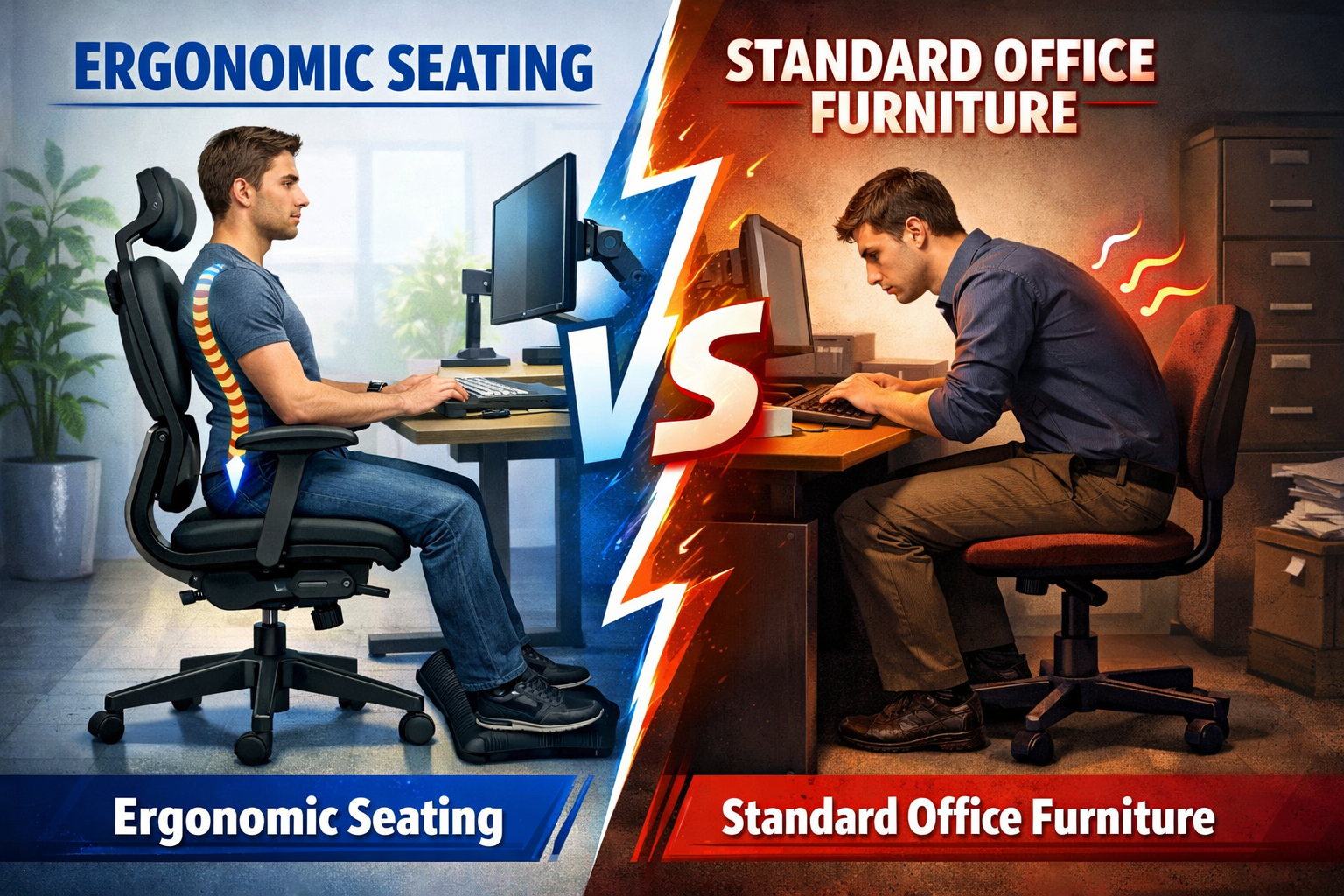
As more people spend long hours sitting at desks—whether in offices or home workspaces—the furniture we use plays a critical role in our health, comfort, and productivity. One of the most common questions businesses and individuals ask is: Is ergonomic seating really better than standard office furniture?
While traditional office chairs and desks may appear cost-effective, ergonomic seating is specifically designed to support the human body, reduce strain, and improve overall workplace performance. Understanding the differences can help you make a smarter investment in your workspace—especially if comfort, well-being, and efficiency matter to you.
What Is Ergonomic Seating?
Ergonomic seating is designed to support the body’s natural posture and movements during prolonged sitting. These chairs are engineered with adjustability, comfort, and long-term health in mind.
Key Features of Ergonomic Seating
- Adjustable seat height, depth, and armrests
- Lumbar (lower back) support
- Recline and tilt mechanisms
- Breathable materials for temperature control
- Designed to reduce muscle strain and fatigue
Ergonomic chairs adapt to the user—not the other way around—making them ideal for long workdays.
What Is Standard Office Furniture?
Standard office furniture typically includes basic chairs and desks designed for general use rather than individual comfort or posture support.
Common Characteristics of Standard Office Chairs
- Limited or no adjustability
- Minimal lumbar support
- Fixed armrests or none at all
- One-size-fits-all design
While these chairs may be sufficient for short-term use, they often lack the features necessary to support prolonged sitting.
Ergonomic Seating vs Standard Office Furniture: A Side-by-Side Comparison
| Feature | Ergonomic Seating | Standard Office Furniture |
|---|---|---|
| Adjustability | Highly adjustable | Minimal or none |
| Posture Support | Excellent lumbar and spinal support | Limited support |
| Comfort for Long Hours | Designed for extended use | Best for short-term use |
| Health Benefits | Reduces back, neck, and shoulder pain | Can contribute to discomfort |
| Productivity Impact | Improves focus and efficiency | May cause fatigue |
| Long-Term Value | Higher upfront cost, better ROI | Lower cost, shorter lifespan |
Health Benefits of Ergonomic Seating
One of the biggest advantages of ergonomic seating is its impact on physical health.
Improved Posture
Ergonomic chairs promote a neutral sitting position, keeping the spine properly aligned and reducing slouching.
Reduced Risk of Musculoskeletal Disorders
Poor seating can lead to chronic back pain, neck stiffness, and repetitive strain injuries. Ergonomic seating helps minimize these risks.
Enhanced Comfort and Circulation
Proper seat depth and height reduce pressure on the legs, improving blood flow and reducing fatigue.
How Ergonomic Seating Improves Workplace Productivity
Comfort directly affects performance. When employees are uncomfortable, productivity drops.
Increased Focus
Ergonomic seating reduces physical distractions like back pain, allowing users to concentrate better.
Fewer Sick Days
By supporting physical health, ergonomic furniture can help reduce absenteeism related to posture-related injuries.
Better Work Efficiency
Comfortable seating encourages longer periods of productive work without frequent breaks due to discomfort.
When Is Standard Office Furniture Still Suitable?
Standard office furniture may still be appropriate in certain situations:
- Short-term or temporary workspaces
- Waiting areas or conference rooms
- Budget-limited environments with minimal sitting time
However, for daily desk work, the limitations become more apparent over time.
Why Businesses Are Switching to Ergonomic Office Furniture
More organizations are recognizing ergonomic seating as a long-term investment rather than an expense.
Benefits for Businesses
- Improved employee satisfaction
- Increased productivity and morale
- Reduced workplace injury claims
- Stronger commitment to employee well-being
Many companies now include ergonomic furniture as part of their workplace wellness strategy.
Choosing the Right Ergonomic Seating for Your Workspace
When selecting ergonomic seating, consider the following:
- Adjustability options
- Quality of lumbar support
- Weight capacity and durability
- Warranty and long-term value
Exploring ergonomic seating collections tailored for office or home use can help you find the right balance between comfort and style.
FAQ: Ergonomic Seating vs Standard Office Furniture
Is ergonomic seating worth the extra cost?
Yes. While ergonomic seating costs more upfront, it offers long-term health benefits, improved productivity, and reduced injury-related expenses.
Can ergonomic chairs help with back pain?
Absolutely. Ergonomic chairs are specifically designed to support the spine and reduce strain, which can significantly alleviate back pain.
Do I need ergonomic furniture for a home office?
If you work from home regularly, ergonomic seating can greatly improve comfort, posture, and productivity.
Are ergonomic chairs difficult to use?
No. Most ergonomic chairs are user-friendly and come with intuitive adjustment controls.
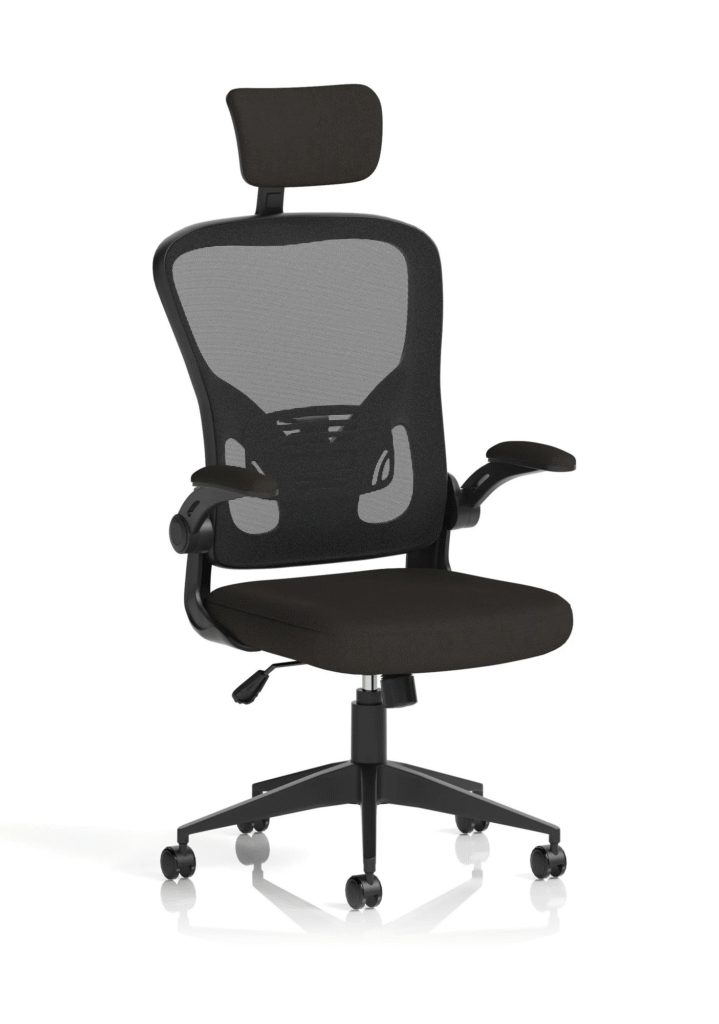
Ergonomic office chair with lumbar support
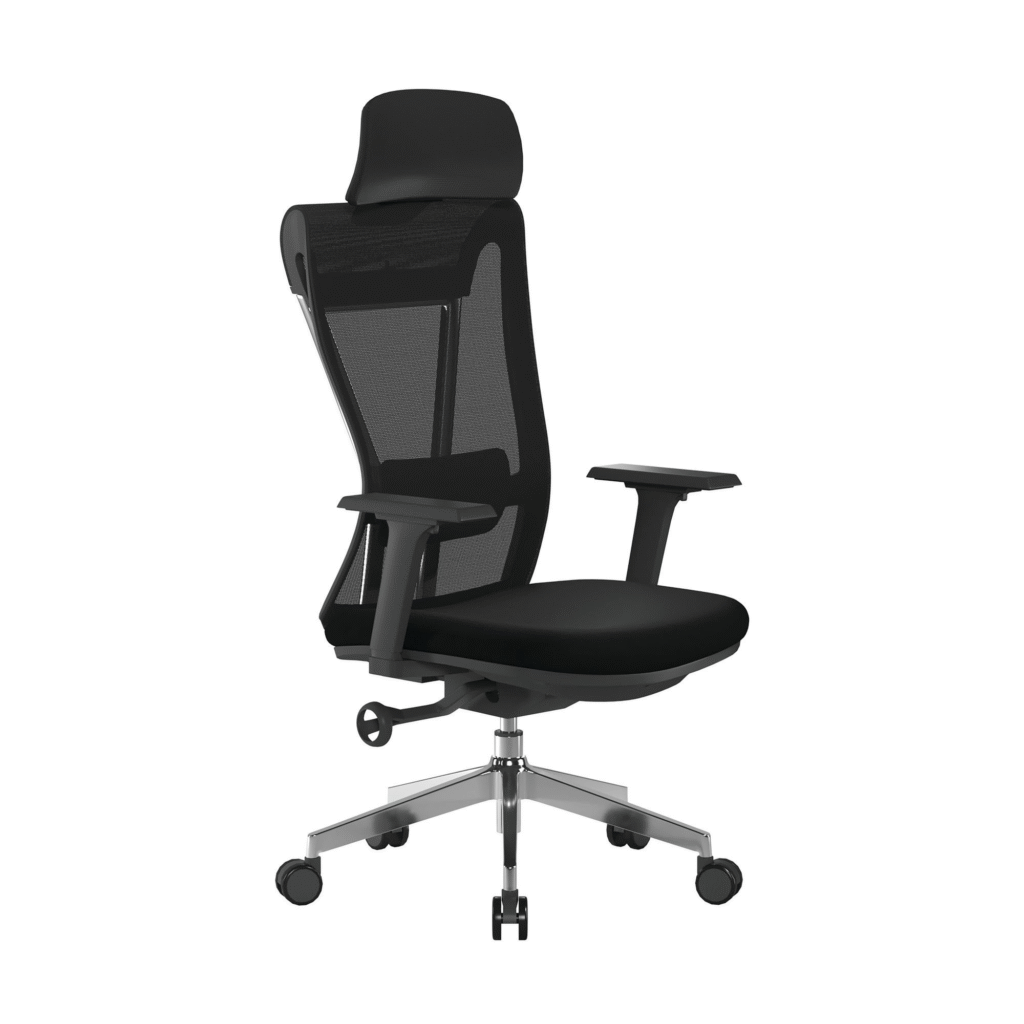
Adjustable ergonomic chair for office workspace
Conclusion: Making the Smart Choice for Your Workspace
When comparing ergonomic seating vs standard office furniture, the difference is clear. Ergonomic seating offers superior comfort, better posture support, and long-term health and productivity benefits. While standard office furniture may work for short-term needs, ergonomic solutions are the smarter choice for anyone spending hours at a desk.
Investing in ergonomic seating isn’t just about comfort—it’s about creating a healthier, more productive workspace that supports you every day.
👉 Explore our ergonomic seating solutions to upgrade your workspace today.