
Blog
Automated External Defibrillators Explained: What You Need to Know

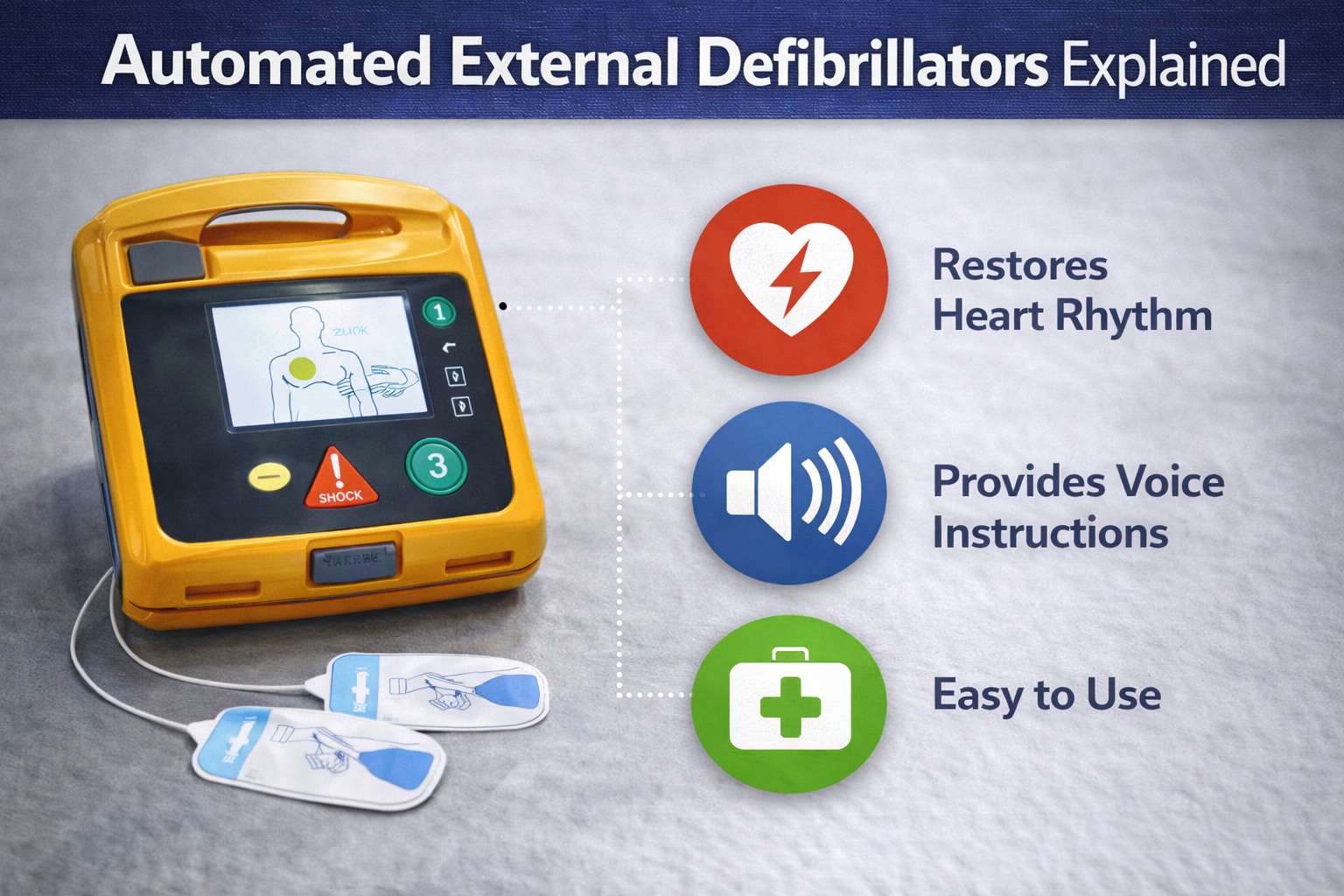
Automated External Defibrillators (AEDs) are life-saving devices designed to treat sudden cardiac arrest (SCA). If someone collapses due to SCA, using an AED can increase their chances of survival by delivering an electric shock to the heart. This blog will explain what AEDs are, how they work, and why having one in public spaces is crucial.
What is an Automated External Defibrillator (AED)?
An Automated External Defibrillator (AED) is a portable device that automatically diagnoses and treats life-threatening cardiac arrhythmias (irregular heartbeats). These devices are designed to be used by bystanders, even without medical training, to help save someone’s life during a cardiac emergency.
- Portable and Easy to Use: AEDs are compact, user-friendly, and designed for anyone to operate, even if they have no medical background.
- Shock Delivery: AEDs analyze the heart’s rhythm and deliver an electric shock if necessary to restore normal heart function.
- Increases Survival Rate: When used within the first few minutes of cardiac arrest, AEDs significantly increase survival rates.
How Does an AED Work?
An AED works by analyzing the heart’s electrical activity to determine if a shock is needed. Here’s how it works step-by-step:
- Step 1: Assess the Situation: When a person collapses and shows signs of cardiac arrest, immediately call for help and start CPR if trained to do so.
- Step 2: Apply AED Pads: Open the AED, place the adhesive pads on the person’s chest as indicated by the device. These pads will detect the heart’s rhythm.
- Step 3: Shock Delivery: The AED analyzes the heart’s rhythm. If it detects a shockable rhythm like ventricular fibrillation or pulseless ventricular tachycardia, it will automatically advise a shock.
- Step 4: Follow Prompts: The AED will guide the user with audible instructions, telling them when to push the shock button, ensuring that the shock is delivered safely.
- Step 5: Continue CPR: After delivering the shock, the AED will prompt the rescuer to continue CPR if needed, ensuring the person remains as stable as possible until emergency services arrive.
Why Are AEDs Important?
AEDs are essential for responding to sudden cardiac arrest, a leading cause of death worldwide. Quick defibrillation can increase survival chances by 50-70%, especially if performed within the first few minutes after the collapse.
- Sudden Cardiac Arrest: SCA happens when the heart suddenly stops beating effectively. It can occur without warning, making immediate response crucial.
- Time is Critical: The chances of survival decrease by 10% for every minute that passes without defibrillation. AEDs increase the likelihood of survival by delivering life-saving shocks within minutes.
- Public Access: AEDs are becoming increasingly accessible in public spaces such as airports, schools, malls, and gyms. The more people who have access to AEDs, the higher the chances of saving a life during an emergency.
Where Can You Find AEDs?
AEDs are strategically placed in locations where sudden cardiac arrest may occur, including:
- Public Areas: Airports, shopping malls, stadiums, and schools often have AEDs to assist in emergencies.
- Workplaces: Many workplaces, especially those with high employee traffic or physical activity, have AEDs on-site.
- Healthcare Settings: Hospitals, clinics, and doctors’ offices also use AEDs, often as part of an emergency response team.
- Vehicles: Some emergency response vehicles, such as ambulances, are equipped with AEDs.
Are AEDs Easy to Use?
Yes, AEDs are designed to be simple to operate. Most devices come with clear audio and visual prompts, guiding the user step-by-step. AEDs automatically detect the heart’s rhythm and only advise a shock if necessary. This means there’s minimal risk of making a mistake.
- No Training Required: While it’s helpful to know basic CPR and first aid, AEDs are safe and easy for anyone to use, even if you don’t have medical experience.
- Self-Analysis: AEDs perform a self-analysis of the victim’s heart rhythm, so there’s no need to make decisions about whether to deliver a shock.
AEDs and Public Health: A Life-Saving Investment
Investing in AEDs for public spaces, businesses, schools, and other high-traffic areas can have a significant impact on public health and safety. Having AEDs readily available increases the likelihood of survival following a sudden cardiac arrest, ensuring that help is available at a moment’s notice.
- Community Responsibility: More businesses and organizations are making AEDs accessible to staff and visitors to contribute to a safer environment.
- Training: Although AEDs are simple to use, it’s a good idea to have staff members trained in CPR and AED use to increase the effectiveness of the response.
Conclusion: The Importance of AEDs in Saving Lives
Automated External Defibrillators are life-saving devices that anyone can use in an emergency. They are easy to operate, highly effective, and significantly improve survival rates following sudden cardiac arrest. By making AEDs more accessible in public places, workplaces, and homes, we can help save more lives and ensure faster responses during cardiac emergencies.